The Science of Lightning: How Charge Builds and Discharges in the Atmosphere
Overview
Lightning is one of nature's most spectacular and powerful phenomena, yet its exact physical origin has long puzzled scientists. For decades, the standard explanation involved simple electrostatic buildup inside thunderclouds: collisions between ice particles and graupel (soft hail) cause charge separation, eventually leading to a massive spark. However, recent research—notably the work of physicist Joseph Dwyer—has shown that the process is far more subtle and intriguing. Dwyer's studies, initially focused on solar flares and energetic particles from the Sun, revealed that lightning may be triggered by runaway relativistic electrons created in strong electric fields. This tutorial takes you step by step through the traditional theory and the surprising new insights that are rewriting our understanding of how lightning forms.
Prerequisites
To follow this guide, you should have a basic grasp of:
- Electrostatics – how charges attract and repel, and what an electric field is.
- Cloud physics – the phases of water and the formation of precipitation in a thunderstorm.
- Particle physics – what runaway electrons are and how they can be accelerated to near light speed.
If you need a quick refresher, see the Common Mistakes section, which clarifies several widespread misconceptions before you dive in.
Step-by-Step Guide to Lightning Formation
Step 1: Charge Separation in the Thundercloud
Inside a well-developed cumulonimbus cloud, strong updrafts carry water droplets upward into freezing levels. There, they collide with ice crystals and graupel. These collisions transfer charge: lighter ice crystals tend to become positively charged and rise to the top of the cloud, while heavier graupel becomes negatively charged and sinks or remains in the middle layer. As a result, a classic tripolar charge structure emerges—positive at the top, negative in the middle, and a smaller positive region near the cloud base.
Step 2: The Electric Field Builds to a Critical Point
The separation of huge volumes of charge creates an enormous electric field inside the cloud (as much as several hundred kilovolts per meter). Normally, air is an excellent insulator, but when the field strength exceeds a certain threshold (about 3 million volts per meter at sea level), the air breaks down and becomes conductive. That breakdown was historically thought to be the main trigger for lightning. However, those laboratory-measured thresholds are rarely reached in real storms, which gave Dwyer and others a clue that something more exotic must be happening.
Step 3: The Traditional Dielectric Breakdown Theory (and Its Limitations)
Classic theory says that the electric field accelerates ambient free electrons to energies high enough to knock other electrons off neutral air molecules, creating an avalanche. This standard "Townsend avalanche" process can indeed start a spark. But measurements from balloons and rockets flying through thunderclouds show that the actual electric fields are typically only one-tenth to one-third of the breakdown threshold. So why does lightning still occur? This puzzle led to the development of the runaway electron breakdown model.
Step 4: The Runaway Electron Breakdown Mechanism
Dwyer's research proposed that when the electric field is still too weak to initiate a conventional breakdown, it can nevertheless accelerate a small population of very high-energy electrons (cosmic-ray secondaries or electrons from radioactive decay) to relativistic speeds. These "runaway" electrons travel so fast that they suffer less energy loss from collisions with air molecules; instead, they gain energy from the field. When these relativistic electrons slam into air molecules, they produce gamma rays and additional high-energy electrons through a process called relativistic runaway electron avalanche (RREA). This avalanche rapidly multiplies the number of charges and creates a small, highly conductive channel that then seeds the full lightning discharge. The mechanism elegantly explains why lightning can start even when the large-scale electric field is well below the conventional breakdown limit.
Step 5: The Role of Cosmic Rays in Triggering Lightning
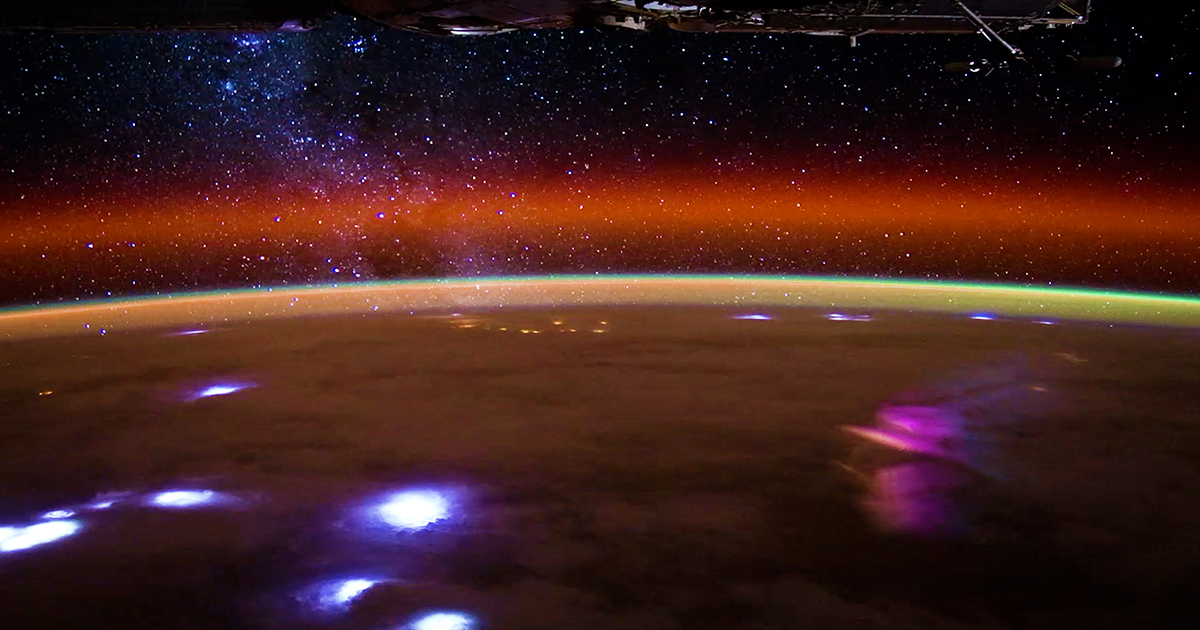
Cosmic rays—energetic particles from outer space—continuously shower Earth's atmosphere. High-energy cosmic-ray muons or electrons can act as the "seed" particles that set off a runaway avalanche. In fact, satellite and ground-based observations have detected bursts of gamma rays (terrestrial gamma-ray flashes, or TGFs) that are exactly the signature of runaway electrons being accelerated inside a thundercloud, sometimes just before a visible lightning stroke. This links solar activity (which modulates cosmic-ray flux) to lightning rates, though the connection is complex.
Step 6: The Leader and Return Stroke Development
Once a conductive path is established (often called the stepped leader), it descends from the cloud in discrete steps, each step lasting about a microsecond. As the leader nears the ground or a tall structure, an opposite charge rises up to meet it, completing the circuit. A massive current then flows in the return stroke, heating the channel to roughly 30,000 K and producing the brilliant flash we see. Multiple strokes often reuse the same channel, giving lightning its flickering appearance.
Common Mistakes
- Mistake: Lightning only strikes during heavy rain.
In fact, lightning can occur more than 10 miles away from the rain core of a storm, sometimes under a clear blue sky (a "bolt from the blue"). Always seek shelter if you hear thunder, even if it's not raining. - Mistake: Lightning always goes from cloud to ground.
Cloud-to-ground strokes are only about 30% of all lightning. The majority occurs within the cloud (intra-cloud) or from cloud to air. There are also upward discharges from tall towers triggered by the storm's electric field. - Mistake: The bottom of the cloud is always negatively charged.
While the main negative charge region is in the mid-levels, the cloud base often contains a small pocket of positive charge. Moreover, the polarity of the return stroke can be negative (most common) or positive (rare but often more powerful). - Mistake: Lightning is purely a static discharge like a spark from a doorknob.
Though the basic principle is similar, lightning involves vastly higher voltages (hundreds of millions of volts), currents (tens of kiloamps), and the exotic runaway electron physics described above.
Summary
Lightning is no longer seen as a simple electrostatic breakdown of air. Thanks to Dwyer's pioneering work and modern observations, we now understand that the process is intimately connected to high-energy particle physics: relativistic runaway electron avalanches triggered by cosmic rays or other energetic seeds can initiate lightning even in relatively weak electric fields. This new picture unites atmospheric science with astrophysics and explains puzzling phenomena like terrestrial gamma-ray flashes. By mastering the step-by-step process from charge separation to the final return stroke, you gain a deeper appreciation for one of Earth's most energetic natural displays.
Related Articles
- The Sound You Can't Hear: How Infrasound May Explain Ghostly Encounters
- 5 Key Reasons I Couldn't Stick with the Galaxy S26 Ultra's Display
- How to Observe the Celestial Triangle of Mars, Saturn, and the Crescent Moon Before Dawn on May 14
- NASA Declares Artemis II a Triumph, Moon Landing Next as Systems Prove 'Ready'
- 5 Fascinating Facts About MIT's Physics-Based Violin Simulator
- Rethinking Reality: Could Consciousness Be More Fundamental Than Quantum Physics?
- From Dream to Launch Console: Your Blueprint to Becoming a NASA Ground Systems Problem Solver
- New Research Reveals Coffee's Dual Impact on Gut Health and Brain Function