10 Fascinating Facts About the Vera C. Rubin Observatory: From Giant Asteroids to Interstellar Wanderers
The Vera C. Rubin Observatory, perched high in Chile's Atacama Desert, is about to revolutionize our understanding of the cosmos. Originally conceived in the mid-1990s as the Dark Matter Telescope, this cutting-edge facility will scan the entire visible sky every few nights for a decade. Its mission: to capture the universe in motion—tracking everything from city-block-sized asteroids to the ghostly remnants of failed supernovae and mysterious interstellar visitors. Here are ten key things you need to know about this astronomical powerhouse.
1. A New Eye on the Moving Sky
Rubin is not your typical telescope. Instead of focusing on a single patch of space, it will repeatedly image the entire southern sky using an enormous 3.2-gigapixel camera—the largest digital camera ever built for astronomy. This unique capability allows it to detect objects that change position or brightness over short timescales, such as asteroids, comets, and supernovae. By capturing the sky every few nights for ten years, Rubin will create an unprecedented time-lapse movie of the universe, revealing dynamic events that static surveys miss. Its primary mission, the Legacy Survey of Space and Time (LSST), will produce over 20 terabytes of data each night—a firehose of discovery that will keep astronomers busy for decades.
2. Hunting Skyscraper-Size Asteroids
One of Rubin's top priorities is to find and track near-Earth asteroids larger than 140 meters—roughly the size of a skyscraper. Such objects could cause regional devastation if they struck our planet, yet many remain undiscovered. Rubin's repeated scans will detect these faint, fast-moving rocks by their motion across the starfield. It is expected to catalog over 90% of all potentially hazardous asteroids of this size within its first few years of operation, dramatically improving our ability to assess and mitigate impact risks. The telescope's wide field of view and sensitive camera make it ideal for spotting these dark, tumbling giants before they become a surprise visitor.
3. Unraveling the Mystery of Failed Supernovae
Some massive stars don't go out with a bang—they fizzle. Known as failed supernovae, these events occur when a star collapses directly into a black hole without a visible explosion. Rubin's all-sky monitoring is uniquely equipped to catch the sudden disappearance of such stars. By comparing images taken weeks or months apart, astronomers can spot a star that vanished, marking the formation of a black hole. These rare events provide crucial insights into stellar death, black hole birth, and the limits of supernova theory. Rubin is expected to discover dozens of failed supernovae, turning a theoretical curiosity into a observable phenomenon.
4. Welcoming Interstellar Visitors
When 'Oumuamua and Borisov passed through our solar system, they hinted that interstellar objects are common. Rubin will be the ultimate interstellar hunter. Its deep, rapid surveys will catch these wayward travelers as they streak through from other star systems. Because Rubin scans the entire sky every few nights, it can detect objects that are only visible for a short time as they zip past the Sun. The observatory is expected to find one or more interstellar visitors every year, allowing scientists to study their composition, orbit, and origins—and perhaps answer whether they carry traces of alien worlds.
5. Mapping Dark Matter's Cosmic Web
Though originally conceived as the Dark Matter Telescope, Rubin's original goal remains central: map the distribution of dark matter across the universe. By analyzing the subtle distortion of light from distant galaxies—a phenomenon called weak gravitational lensing—Rubin will create the most detailed 3D map of dark matter ever made. This will help cosmologists understand how dark matter influences galaxy formation and evolution, and test theories of modified gravity. The survey will cover billions of galaxies, providing a statistical powerhouse for dark matter studies.
6. A Revolution in Transient Astronomy
Rubin will detect millions of transients—events that appear suddenly and fade—like supernovae, gamma-ray burst afterglows, and tidal disruption events. Its automated pipeline will issue alerts within 60 seconds of detection, enabling ground-based and space telescopes to follow up immediately. This will transform our ability to study explosive phenomena in real time, from nearby stellar eruptions to distant cosmic explosions. Astronomers anticipate Rubin will increase the known supernova sample by a factor of a thousand, providing statistical power to refine cosmic distance measurements and understand stellar evolution.
7. The Telescope and Its Giant Camera
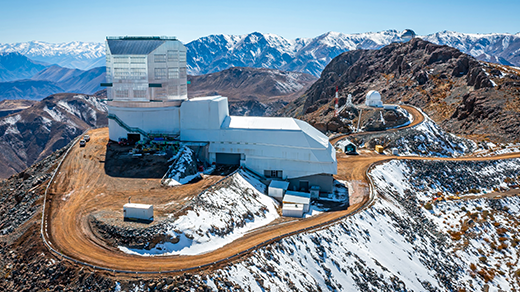
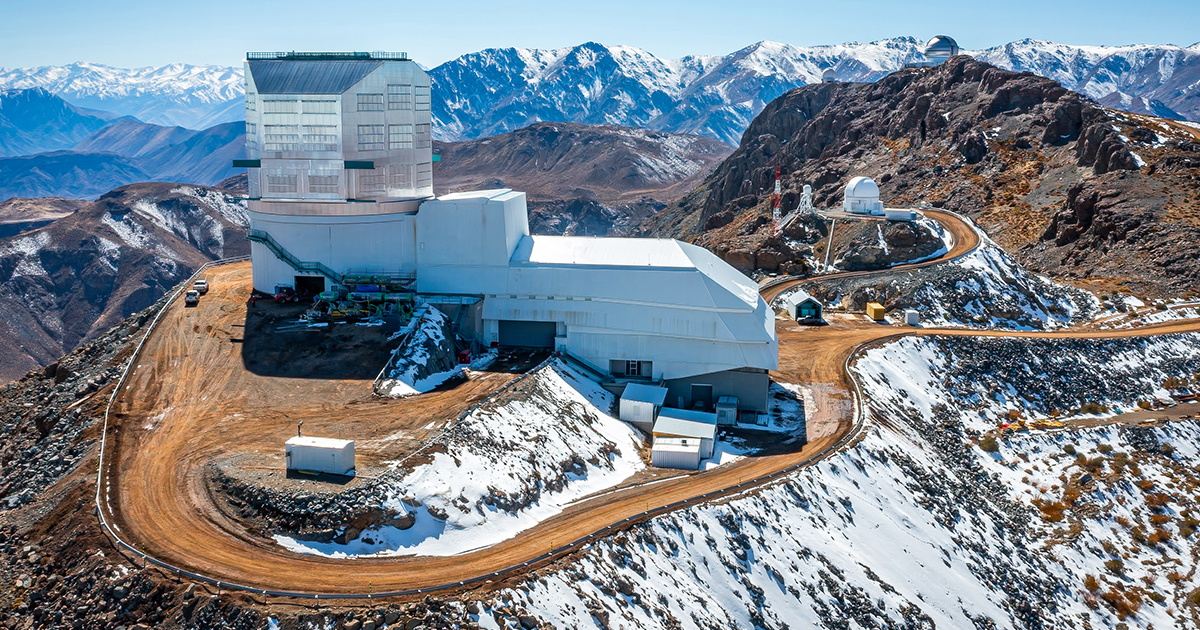
At the heart of Rubin is an 8.4-meter primary mirror, but its real marvel is the 3.2-gigapixel camera—built out of 189 CCD sensors. This camera has a field of view 40 times the area of the full Moon, allowing it to cover the entire visible sky in just three nights. Each image is so large that it would take over 1,500 high-definition TV screens to display one full exposure. The camera operates at minus 100 degrees Celsius to minimize noise, and its shutters are precise enough to capture fast-moving objects. This engineering marvel is the key to Rubin's survey power.
8. The Data Firehose: 20 Terabytes a Night
Rubin will generate about 20 terabytes of raw data every night—equivalent to streaming 8,000 movies in HD. Processing this torrent requires a dedicated data management system that will produce alerts, images, and catalogs. The data will be publicly available, making Rubin a discovery machine for professional and amateur astronomers alike. Algorithms will automatically classify detected objects, from variable stars to moving asteroids, and flag anomalies for human review. This open-science approach maximizes the return on investment, inviting global participation.
9. A 10-Year Time-Lapse of the Universe
By taking images of the same patches of sky repeatedly over a decade, Rubin will build a deep, multi-epoch dataset. This allows for studies of long-term changes: the motion of stars in the Milky Way, the growth of supermassive black holes, the fading of supernova remnants, and even the slow drift of asteroids. Astronomers can stack images to create the deepest views ever—reaching galaxies 10 billion light-years away—while time-domain science probes everything from transiting exoplanets to gravitational lensing events. The legacy of this 10-year survey will last for generations.
10. The Future of Astronomy Starts Here
Rubin is not just a telescope; it is a new paradigm in astronomy. Its combination of wide field, fast cadence, and deep imaging will address fundamental questions: What is dark energy? How do galaxies evolve? Are we alone? (by finding interstellar objects and maybe even signs of extraterrestrial technology). The observatory is named after Vera Rubin, the astronomer who discovered evidence for dark matter. With first light expected in 2025, the countdown has begun. Rubin will forever change our view of the dynamic universe, tracking everything from skyscraper-size rocks to enigmatic interstellar wanderers—and things we haven't even imagined yet.
From giant asteroids and invisible supernovae to visitors from other stars, the Vera C. Rubin Observatory promises to keep us on the edge of our seats. Its all-sky surveillance will alert us to cosmic events as they happen, creating a real-time map of our ever-changing universe. As operations begin, we stand on the verge of a new golden age in astronomy, where every night brings a new discovery.
Related Articles
- How to Experience 50 Years of Space History at NASA Goddard’s Visitor Center
- Breakthrough Study Shows Young Gut Bacteria Reverses Liver Aging in Mice
- Strawberry Moon 2026: Peak Times and Viewing Tips for June's Celestial Spectacle
- Rare Triple-Planet Alignment Visible in May: Venus, Jupiter, and Mercury to Converge at Dawn
- How to Examine Declassified Apollo 12 Moon Images for Unexplained Phenomena
- The Complete Smartphone: Lessons from the Galaxy S21 Ultra on What Matters Most
- 7 Revelations from Rejecting Infinity: What Mathematics Loses and Gains
- May's Planetary Trio: A Step-by-Step Skywatching Guide