Everything You Need to Know About Gemini 3.5 Flash: Google’s Fastest and Smartest AI Model Yet
At Google I/O 2026, the tech giant unveiled the latest chapter in its AI journey with the Gemini 3.5 family, starting with the highly anticipated Gemini 3.5 Flash. This model is designed to be both the fastest and most intelligent option in Google's lineup, promising dramatic improvements in coding tasks and autonomous agent performance. Rolling out immediately to billions of users worldwide, Gemini 3.5 Flash builds on the foundation laid by Gemini 3 (late 2025) and Gemini 3.1 (early 2026), offering a leap forward in speed and capability. Jump to the speed comparison.
When and where was Gemini 3.5 Flash announced?
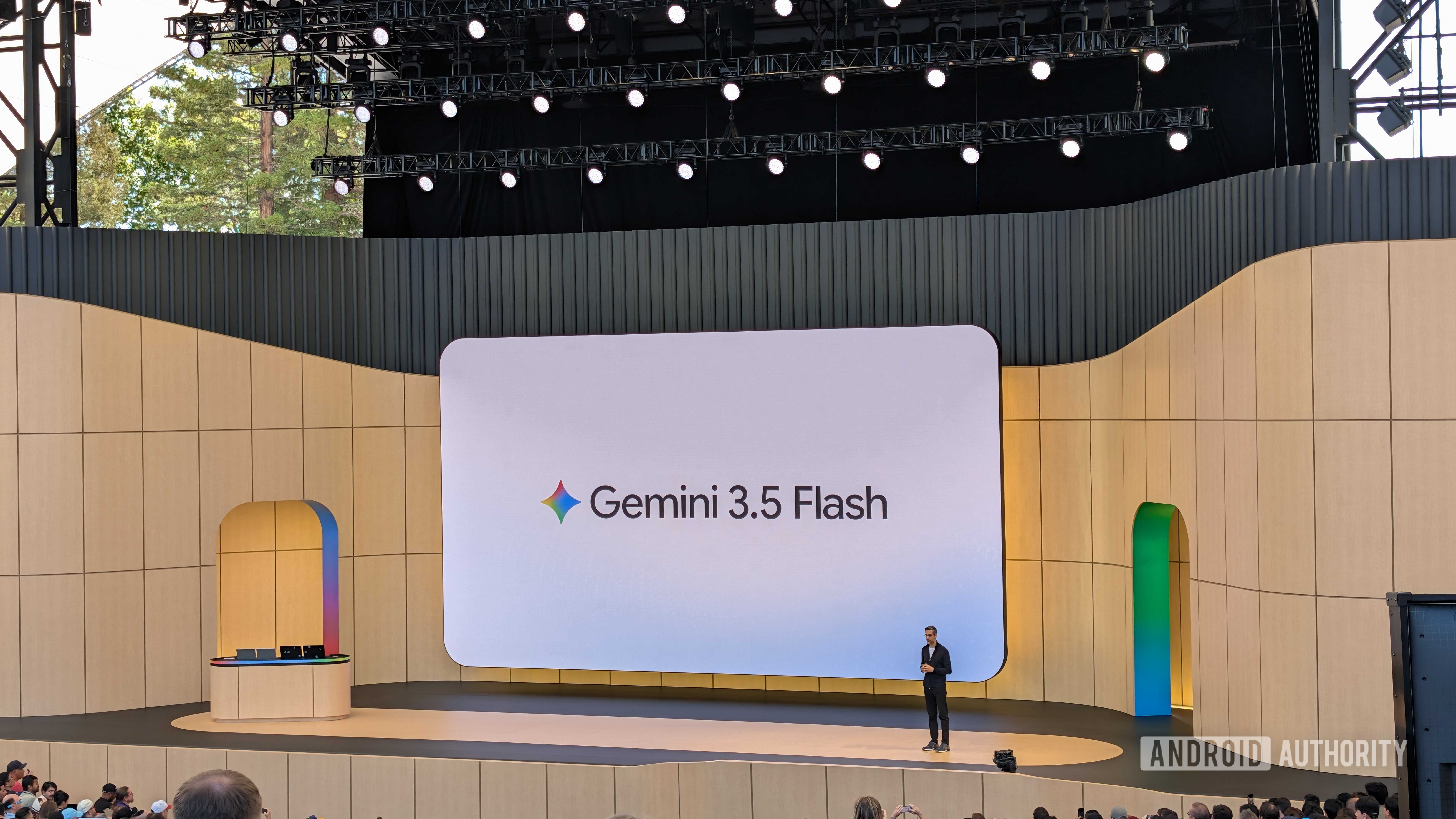
Gemini 3.5 Flash was officially announced on May 20, 2026, during the Google I/O 2026 keynote. It was introduced as the first model in the new Gemini 3.5 family. Google confirmed that this model is already rolling out globally as the default experience for billions of users within both the Gemini app and across Google Search. The announcement marks a significant milestone just a few months after the release of Gemini 3.1 in February 2026, showing Google's accelerated pace in AI advancement.
How fast is Gemini 3.5 Flash compared to other models?
Speed is one of Gemini 3.5 Flash's headline features. According to Google, it operates four times faster than competing frontier models currently on the market. This speed boost doesn't come at the cost of intelligence; in fact, it's coupled with superior performance. The model is designed to deliver near-instantaneous responses, making it ideal for real-time applications like interactive coding assistants, conversational agents, and search queries. This performance leap is achieved through architectural optimizations rather than sheer parameter count, allowing it to run efficiently while maintaining high accuracy.
How does Gemini 3.5 Flash perform on coding and agentic benchmarks?
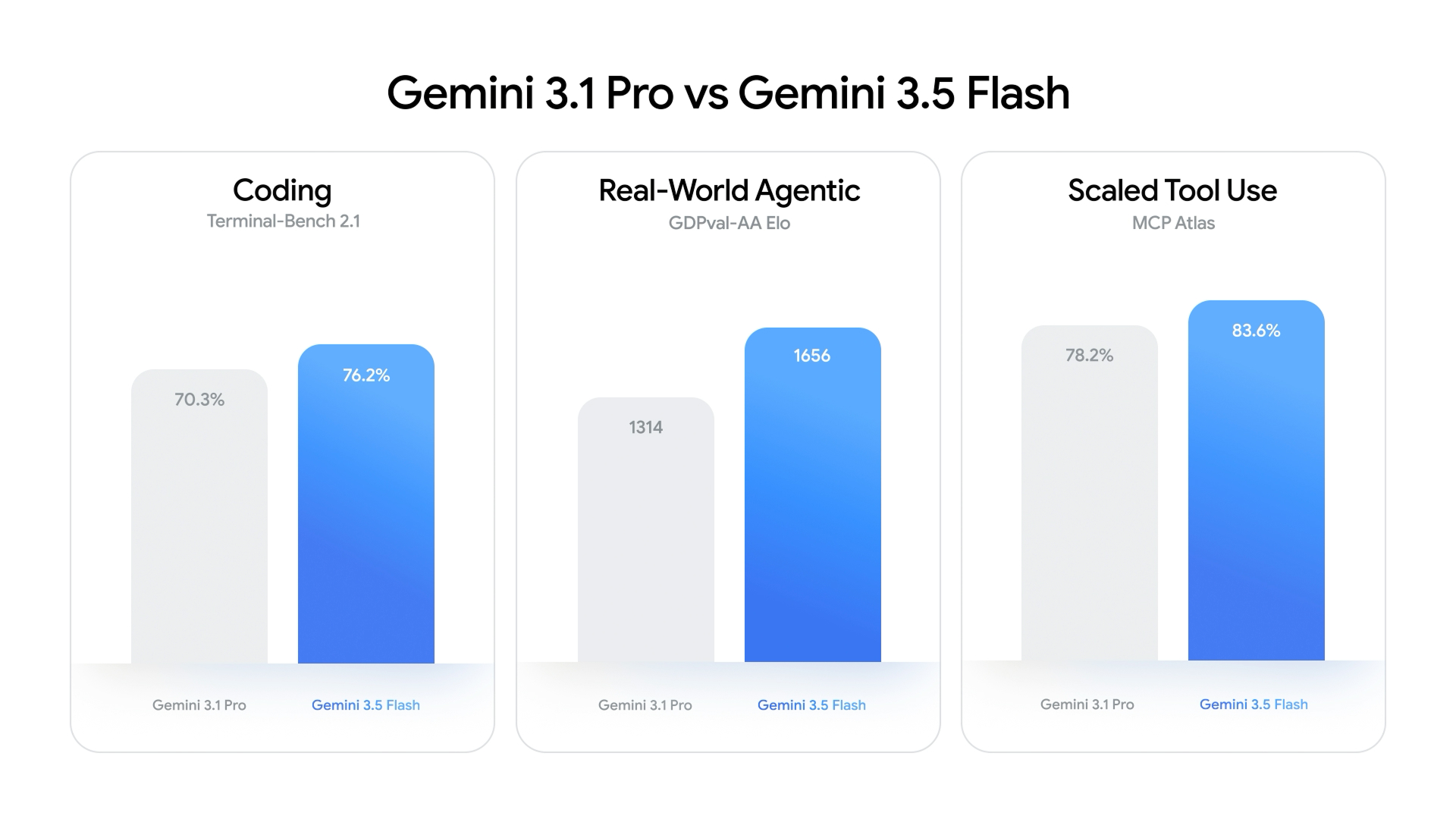
In benchmark tests, Gemini 3.5 Flash outperforms its predecessor, Gemini 3.1 Pro, on both coding and agentic tasks. For coding, this includes improved code generation, debugging, and multi-step programming challenges. For agentic benchmarks, which measure a model's ability to plan and execute autonomous actions (like browsing the web, controlling software, or interacting with APIs), Gemini 3.5 Flash shows dramatic gains. This makes it particularly valuable for developers building AI agents that need to perform complex workflows quickly and reliably. Google's internal metrics suggest a 15–20% improvement over Gemini 3.1 Pro in these key areas.
Where is Gemini 3.5 Flash being rolled out?
Gemini 3.5 Flash is being deployed as the default model for billions of users globally. Initially, it's being integrated into the Gemini app (both mobile and web) and directly into Google Search. Users will automatically benefit from the upgraded performance without any action required. Google also hints that broader integration across its ecosystem—including Workspace, Cloud, and Android—will follow in the coming weeks. This wide-scale rollout underscores Google's confidence in the model's stability and capability.
Why is it called Google’s “smartest speed model”?
Google has branded Gemini 3.5 Flash as its smartest speed model because it strikes a unique balance between rapid response times and high intelligence. Unlike earlier fast models that sometimes sacrificed accuracy for speed, Gemini 3.5 Flash uses advanced optimization techniques—such as mixture-of-experts pruning and refined training data—to deliver both. It can handle complex reasoning, long context windows (up to 1 million tokens), and nuanced instructions without latency. This makes it suitable for tasks that previously required much slower, more powerful models, effectively democratizing high-level AI capabilities for everyday use.
What specific coding improvements does Gemini 3.5 Flash offer?
For developers and coders, Gemini 3.5 Flash introduces several concrete improvements: it generates code with fewer errors, better explains existing code, and supports multi-step programming assistance. It also excels in agentic coding scenarios where the AI must autonomously search documentation, test outputs, and iterate on solutions. Performance in popular benchmarks like HumanEval and SWE-bench shows notable gains. Additionally, the model's speed means real-time code suggestions and completions feel instantaneous, even for large projects. This positions Gemini 3.5 Flash as a strong competitor to specialized coding assistants like GitHub Copilot.
What can we expect next from the Gemini 3.5 family?
Gemini 3.5 Flash is just the beginning. Google has confirmed that the Gemini 3.5 family will eventually include larger, more powerful models (likely a Pro and Ultra tier) designed for specialized enterprise and research applications. These models are expected to push the boundaries of multimodal understanding, reasoning, and autonomy further. Meanwhile, Flash serves as the workhorse for consumer and developer use cases. Google also promises ongoing refinements via updates—meaning the Flash model may become even smarter over time.
Related Articles
- 10 Key Updates About Android Auto's Music App Revolution
- Celestron Unveils Outland X 10x25: Affordable Waterproof Binoculars for Outdoor Adventurers
- 5 Superior Smartphone Alternatives to the Motorola Razr Ultra (2026)
- Smart Water Bottles and Cash Incentives Fail to Curb Repeat Kidney Stones in Landmark Study
- Global Internet Disruptions Q1 2026: From Government Blackouts to Infrastructure Failures
- Mastering Factual Accuracy: A Guide to Preventing Extrinsic Hallucinations in LLMs
- Internet Architect Jeff Atwood and Veteran Alexander Vindman to Open Dialogue on American Dream at Historic Cooper Union
- Anthropic's Claude Security Enters Enterprise Beta After Catching Years-Old Vulnerabilities