Quick Facts
- Category: Software Tools
- Published: 2026-05-02 01:05:17
- Safeguarding Configurations at Scale: How Meta Prevents Rollout Disasters
- 6 Essential Steps to Set Up React in Rails Using Webpacker
- Mapping Hidden Code Knowledge: Meta's AI-Driven Context Engine
- A Vendor's Guide to Supporting LVFS and Avoiding Service Restrictions
- How to Leverage Congressional Hearings to Safeguard NIH Funding and Vaccine Research
Understanding the Two Core Modes
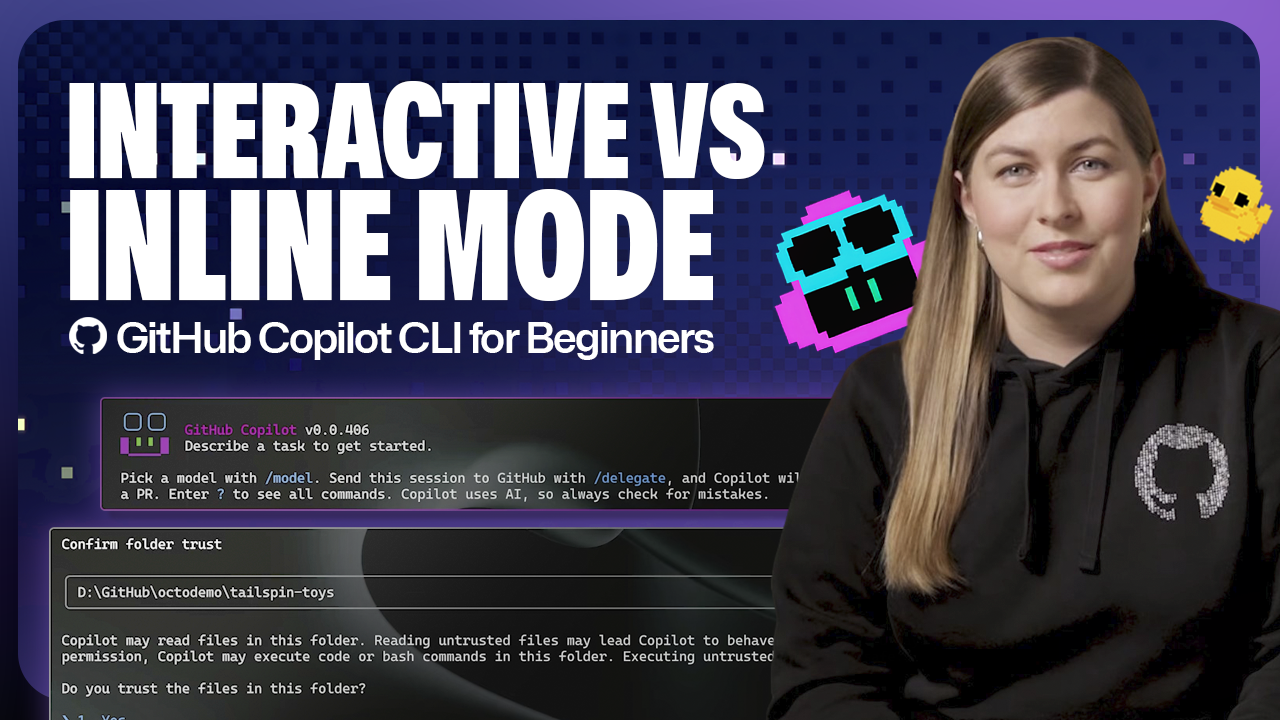
GitHub Copilot CLI offers two distinct ways to interact with its AI-powered assistant: interactive mode and non-interactive mode. Each is tailored to different workflows, whether you're exploring a complex codebase or need a quick answer without leaving your terminal. This guide breaks down both modes, shows you how to enter them, and explains when to use each for maximum efficiency.
What is Interactive Mode?
Interactive mode is the default experience when you launch Copilot CLI by typing copilot in your terminal. It's a conversational, back-and-forth session where you can ask questions, review answers, and iterate as you go. Think of it as having a pair programmer right in your command line — you can ask for instructions, request code generation, or even ask Copilot to execute commands for you.
To enter interactive mode:
- Type
copilotand press Enter. Copilot may ask you to trust the folder (it needs read/write permissions to analyze your project). - Ask a question, such as "How do I run this project locally?". Copilot provides detailed instructions.
- For a more collaborative approach, follow up with "Can you run it for me?". Copilot will assess your project and start the server.
- Review the output, make changes, and continue the conversation — all within the same session.
This mode is ideal for deep, exploratory work — debugging, understanding unfamiliar code, or building features step-by-step. You can ask clarifying questions, refine prompts, and get contextual assistance without breaking your flow.
What is Non-Interactive Mode?
Non-interactive mode is designed for speed and simplicity. Instead of entering a full session, you pass a single prompt directly in your terminal using the -p flag. Copilot responds immediately and returns you to your shell — no follow-ups, no extra steps.
To use non-interactive mode:
- Start at your regular command line (if you're in a Copilot session, exit first).
- Type
copilot -p "Quickly summarize what this repository does and the key folders." - Copilot analyzes your project files and delivers a concise answer — that's it.
This mode shines for fast, one-off tasks: summarizing a repository, generating a code snippet, checking a configuration, or integrating into automated scripts. You get the information you need without stepping out of your terminal workflow.
When to Use Each Mode
Choosing between interactive and non-interactive mode depends on your goal. Use interactive mode when you need to explore, debug, or build — situations where iterative dialogue adds value. Use non-interactive mode when you need quick answers for known questions or want to embed Copilot into automated pipelines.

- Interactive: Ideal for learning a new codebase, troubleshooting errors, or developing features collaboratively.
- Non-interactive: Perfect for daily shortcuts, summarizing documentation, generating boilerplate, or scripting repetitive queries.
Getting Started: Step-by-Step
Starting an Interactive Session
After typing copilot, confirm folder trust when prompted. Then, try a simple prompt like "List all files larger than 1MB". Copilot will respond; you can refine the query or ask it to execute the command. This hands-on approach lets you verify each step before proceeding.
Triggering a Non-Interactive Command
From your regular shell, run: copilot -p "Explain this Dockerfile and suggest optimizations". Copilot will output a brief analysis and immediately exit. Great for quick insights without context switching.
Tips for Maximizing Your Workflow
Combine both modes for different phases of a project. For example, use non-interactive mode to quickly fetch a file summary, then switch to interactive mode to explore deeper. To resume a previous session, Copilot CLI doesn't yet support session history, but you can recreate context by starting a new interactive session with a brief project reminder.
- Use non-interactive for repetitive tasks — alias
copilot -pcommands in your shell for even faster access. - Switch to interactive when you hit a complex bug or need to generate multi-step solutions.
- Remember: non-interactive doesn't save context, so use it for standalone prompts.
Conclusion
GitHub Copilot CLI's two modes offer flexibility for every developer. Interactive mode gives you a conversational partner for deep work; non-interactive mode delivers instant answers without ceremony. By mastering both, you'll handle everything from quick lookups to in-depth code exploration — all from the command line.